Construction: Made of a positive leg of Iron (Fe) and a negative leg of Constantan (a copper-nickel alloy).
Temperature Range: Standard range is -40°C to 750°C, but it can be used for short durations up to 1,000°C.
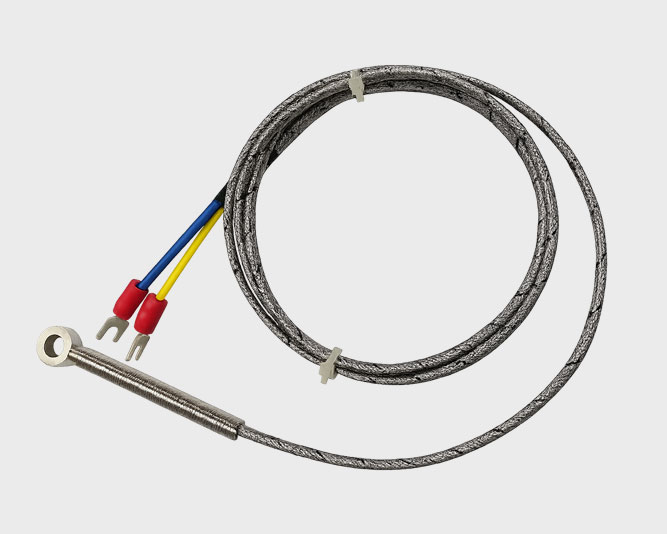
J Type Thermocouple
Key Features
Construction: Made of a positive leg of Iron (Fe) and a negative leg of Constantan (a copper-nickel alloy).
Temperature Range: Standard range is -40°C to 750°C, but it can be used for short durations up to 1,000°C.
Atmospheric Suitability: It’s ideal for reducing atmospheres (where oxygen is low, and reducing gases are present) or vacuum applications, but it degrades rapidly in oxidizing atmospheres above 550°C.
Sensitivity: Has a sensitivity of approximately 50 µV/°C, which contributes to its precision.
Durability & Lifespan: It is considered sturdy and cost-effective but has a shorter lifespan at high temperatures compared to other types like Type K.
Curie Point Limitation: The iron in the positive leg has a Curie point at around 770°C, which limits the thermocouple’s maximum operating temperature.
| Technical Specifications | Details |
|---|---|
| • Temperature Range | 0 to 400 deg C |
| • Accuracy | +/- 2.5 deg C or +/- 0.75%) |
| • Class | Class 1 |
| • Probe Material | Stainless Steel |
| • Material | Stainless Steel |
| • Application | Industrial |
| • Assembly | Surface Thermocouple |
Related Products
Get Started
Get in touch today for reliable