Lead Resistance Compensation: The primary advantage of a 3-wire configuration is its ability to eliminate or significantly reduce errors caused by the resistance of the extension wires, leading to more accurate temperature readings.
Wide Temperature Range: These cables are constructed to withstand extreme hot and cold temperatures, making them suitable for a variety of demanding industrial applications.
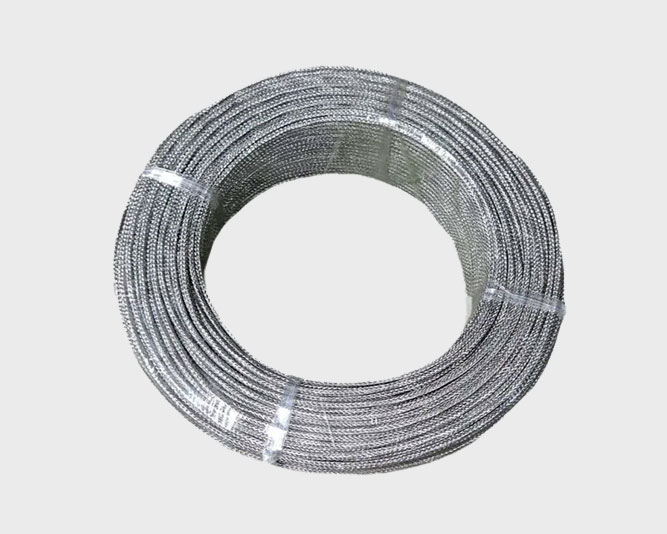
3 Core RTD Cable
Key Features
Lead Resistance Compensation: The primary advantage of a 3-wire configuration is its ability to eliminate or significantly reduce errors caused by the resistance of the extension wires, leading to more accurate temperature readings.
Wide Temperature Range: These cables are constructed to withstand extreme hot and cold temperatures, making them suitable for a variety of demanding industrial applications.
Robust Construction: RTD cables are designed to be durable and resistant to harsh environments, including mechanical stress, vibration, moisture, and chemicals.
High Insulation and Heat Resistance: Featuring insulation materials like PTFE or silicone rubber, they offer excellent heat resistance and maintain integrity at high temperatures.
Shielding: Many RTD cables include shielding to protect against electromagnetic interference (EMI) and radio frequency interference (RFI), which can disrupt temperature measurements.
Flexibility: The cable’s design often includes stranded copper conductors, providing excellent flexibility for easier installation in various systems.
| Technical Specification | Details |
|---|---|
| • Temperature | 150 Degree C |
| • Number of Cores | 3 Core |
| • Type | PT100 |
| • Accuracy | Class A |
| • Conductor Type | Copper |
| • Insulation Material | PTFE (Teflon) |
| • Application | Connection between a thermocouple and a measuring device |
| • Minimum Order Quantity | 100 Meter |
Get Started
Get in touch today for reliable